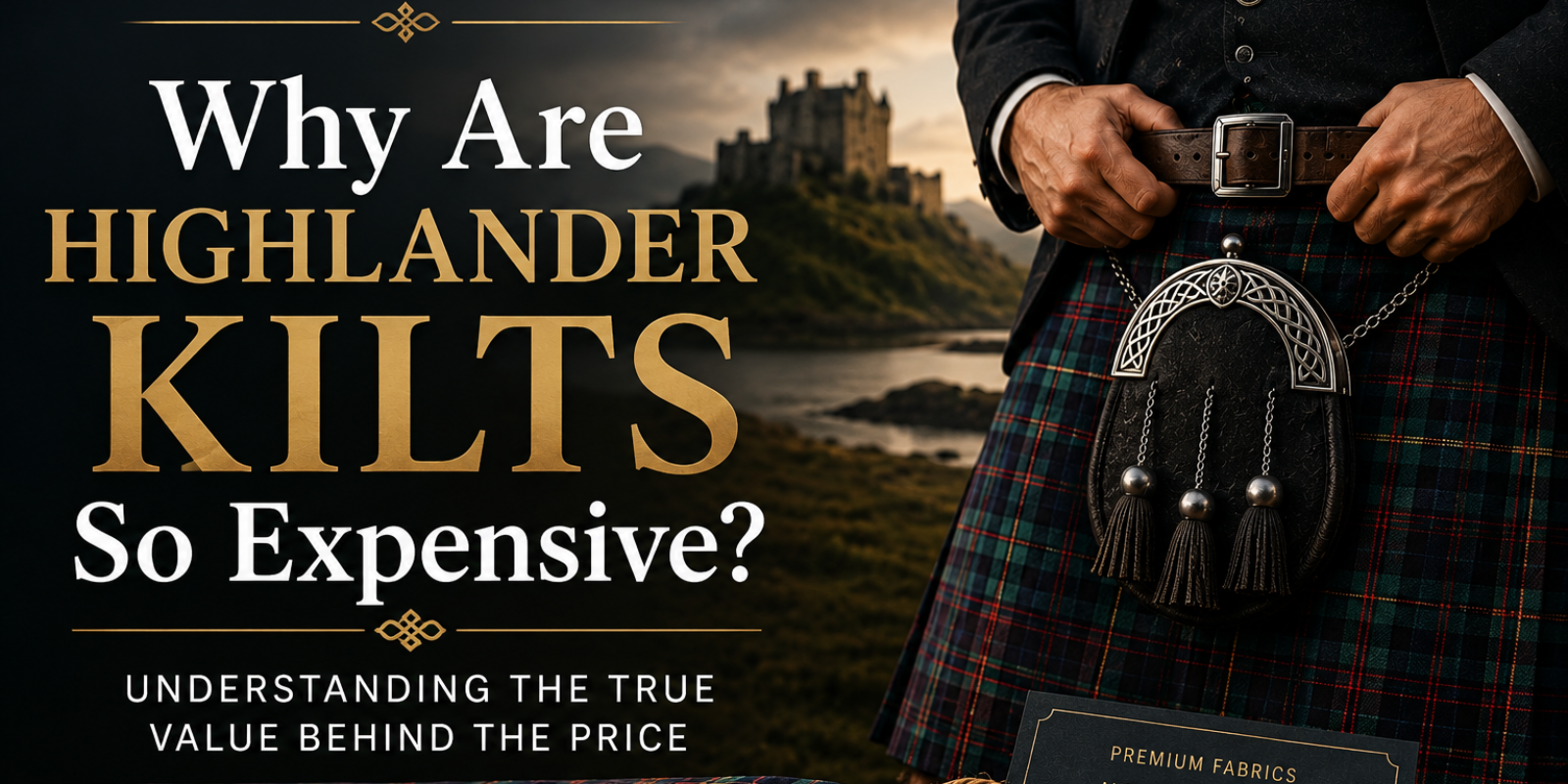
If you’ve ever searched for a Highlander kilt, you’ve probably noticed that prices vary dramatically. Some kilts are available for less than $50, while others cost several hundred dollars or even exceed $1,000. This price difference often leaves buyers wondering whether premium Highlander kilts are genuinely worth the investment.
The answer is yes—when you understand how authentic kilts are made. Unlike mass-produced garments, a traditional Highlander kilt requires premium materials, skilled craftsmanship, precise tailoring, and a rich cultural heritage that has been preserved for centuries. Every stage of production contributes to its quality, durability, and value.
In this guide, we’ll explore the key reasons why Highlander kilts are expensive and why many people consider them an investment rather than just another piece of clothing.
Premium Materials Increase the Cost
One of the biggest reasons Highlander kilts are expensive is the quality of the fabric. Traditional kilts are commonly made from high-quality wool, which is valued for its durability, comfort, and ability to maintain sharp pleats over time.
Unlike lightweight synthetic fabrics, premium wool offers excellent breathability while providing the structured appearance that authentic Highland dress is known for. Producing high-quality tartan fabric also requires specialized weaving techniques and carefully selected yarns, which significantly increase manufacturing costs.
While acrylic and polyester kilts are available at much lower prices, they generally cannot match the appearance, comfort, or longevity of genuine wool.
Authentic Kilts Require a Large Amount of Fabric
A Highlander kilt uses considerably more fabric than most people expect. Traditional eight-yard kilts require approximately seven to nine yards of tartan material, depending on the wearer’s measurements and the pleating style.
Since tartan fabric itself is expensive, using such a large quantity naturally raises the overall cost. The additional material is essential for creating the deep pleats that give Highland kilts their distinctive appearance and movement.
This generous use of fabric is one of the defining characteristics that separates authentic kilts from inexpensive costume versions.
Skilled Craftsmanship Takes Time
Making a Highlander kilt is a highly specialized craft. Each pleat must be measured, folded, aligned with the tartan pattern, pressed, and securely stitched. Even experienced kilt makers spend several hours constructing a single garment.
Unlike factory-produced clothing that can be assembled quickly, authentic kilts require patience and precision throughout the manufacturing process. Every detail, from the waistband to the final stitching, is carefully completed to ensure the garment performs well and maintains its shape for years.
The expertise required to produce a quality kilt is one of the primary reasons premium kilts command higher prices.
Custom Tailoring Adds Value
Most authentic Highlander kilts are made to fit the individual wearer rather than being produced in standard clothing sizes.
Customers typically provide detailed measurements, including waist, hips, and kilt length. These measurements allow manufacturers to create a garment that fits comfortably while maintaining the traditional proportions expected in Highland dress.
Custom tailoring requires additional labor, careful planning, and individual production, all of which contribute to the final cost.
Quality Hardware Makes a Difference
A Highlander kilt is much more than folded fabric. It also includes durable components designed to withstand years of regular use.
Premium kilts typically feature genuine leather straps, solid metal buckles, reinforced waistbands, heavy-duty canvas lining, and high-strength stitching. These materials improve durability while ensuring the kilt remains comfortable during extended wear.
Cheaper alternatives often replace these components with synthetic materials that wear out much faster.
Authentic Tartan Production Is Specialized
Every tartan follows a precise thread count and color sequence. Producing authentic tartan requires specialized weaving equipment and strict quality control to maintain historical accuracy.
Many premium manufacturers source their tartan from well-established weaving mills that have produced traditional Scottish fabrics for generations. These mills maintain exceptionally high standards, resulting in textiles that are both visually striking and remarkably durable.
Because of this specialized production process, authentic tartan costs significantly more than ordinary plaid fabric.
Highlander Kilts Are Built to Last
One of the strongest arguments for purchasing a premium Highlander kilt is its longevity.
A well-made wool kilt can last several decades when properly cared for. Many families pass kilts down from one generation to the next, making them heirloom garments rather than disposable fashion items.
Although the initial purchase price may seem high, the long lifespan often makes a quality kilt more economical than replacing lower-quality garments every few years.
Heritage and Tradition Add Lasting Value
For many people, a Highlander kilt represents much more than traditional clothing. It symbolizes Scottish heritage, family history, cultural identity, and personal pride.
Whether worn at weddings, Highland games, military ceremonies, formal events, or cultural celebrations, the kilt carries centuries of tradition. This historical significance adds value that cannot be measured solely by the cost of materials or labor.
Owning an authentic Highlander kilt allows wearers to participate in a tradition that has been preserved for generations.
Are Expensive Highlander Kilts Worth It?
Whether an expensive Highlander kilt is worth the investment depends on how you plan to use it.
If you’re purchasing a kilt for occasional costume events, an inexpensive acrylic version may be sufficient. However, if you want a garment that offers superior comfort, exceptional durability, authentic appearance, and long-term value, investing in a professionally made Highlander kilt is usually the better choice.
Quality kilts maintain their appearance for many years and often become treasured pieces that can be worn repeatedly without losing their structure or style.
How to Choose a Quality Highlander Kilt
Before purchasing a Highlander kilt, consider the following factors:
- Choose premium wool or high-quality tartan fabric.
- Check the weight and density of the material.
- Look for deep, evenly aligned pleats.
- Inspect the stitching and overall construction.
- Ensure the kilt includes genuine leather straps and durable hardware.
- Select a manufacturer with a strong reputation for craftsmanship.
- Consider custom sizing for the best possible fit.
Taking these factors into account will help you choose a kilt that offers excellent value for years to come.
Final Thoughts
Highlander kilts are expensive because they combine premium materials, traditional craftsmanship, custom tailoring, and centuries of Scottish heritage into a single garment. From the substantial amount of tartan fabric required to the hours of skilled labor involved in construction, every element contributes to the final price.
Rather than viewing an authentic Highlander kilt as an ordinary piece of clothing, it is better understood as a long-term investment in quality, tradition, and timeless craftsmanship. For those who appreciate genuine Highland dress, the higher price reflects the exceptional value and enduring legacy that these remarkable garments provide.
Frequently Asked Questions
Why are Highlander kilts more expensive than regular kilts?
Highlander kilts often use premium tartan fabric, require more material, involve skilled craftsmanship, and are frequently custom-made, all of which increase production costs.
How much fabric does a traditional Highlander kilt require?
A traditional kilt typically requires between seven and nine yards of tartan fabric, depending on the wearer’s size and pleating style.
Are wool Highlander kilts better than acrylic kilts?
Yes. Wool kilts generally offer better durability, comfort, appearance, and longevity than acrylic alternatives, making them a preferred choice for formal wear.
How long can a quality Highlander kilt last?
With proper care, an authentic Highlander kilt can last several decades and is often passed down through generations.
Is buying an expensive Highlander kilt worth it?
If you value authentic craftsmanship, premium materials, and long-term durability, investing in a high-quality Highlander kilt is often worthwhile. It provides better performance, greater comfort, and significantly longer service life than cheaper alternatives.